Hi,

A supply crisis is building where the world least expects it. Most people still don’t understand how severe the energy situation has become in the Middle East. This is no longer simply a story about higher gasoline prices. Critical oil routes are being disrupted simultaneously, diesel is hitting record levels, and the potential consequences are spreading into transportation, agriculture, manufacturing and ultimately the price of almost everything.
And the situation is continuing to get worse.

THREE ENERGY LIFELINES ARE UNDER PRESSURE
Saudi Arabia’s critical East-West oil pipeline has been shut down following recent attacks. The pipeline can transport roughly 5 million barrels of oil per day, making it one of Saudi Arabia’s most important alternatives to the increasingly disrupted Strait of Hormuz.
Then there is the Bab el-Mandeb Strait, another critical energy chokepoint. Roughly 6 MILLION barrels of crude oil per day are currently flowing through the strait toward Asia. If the route is shut down or becomes too dangerous for tankers, an enormous amount of global oil supply would suddenly need to be rerouted.
And then there is the Strait of Hormuz itself. Before the war, enormous volumes of oil moved through this narrow waterway every day. Traffic has now fallen to a fraction of normal levels, disrupting or putting at risk roughly 15 million barrels per day of oil flows.
Put these routes together and the potential disruption becomes enormous relative to a global oil market of roughly 100 million barrels per day. Even accounting for some overlap between the routes, this is an extraordinary amount of energy supply being disrupted, rerouted or placed at risk.
This is not a minor supply hiccup.
It is an energy shock.
DIESEL IS FLASHING A WARNING
Perhaps even more concerning is what is happening with diesel. The U.S. Gulf Coast benchmark for ultra-low-sulfur diesel has reached its highest level since the assessment began in 2006, as global fuel markets are being squeezed by geopolitical disruptions and tight supplies.
Why does that matter?
Because diesel is not just what powers trucks. It powers tractors. Harvesters. Construction equipment. Mining operations. Ships. Delivery fleets. Industrial machinery. Farmers use enormous amounts of diesel to plant, maintain and harvest crops. When diesel becomes dramatically more expensive, those costs eventually work their way through the entire food supply chain.
Higher fuel costs mean higher transportation costs. Higher transportation costs mean higher costs for food and goods. And that is how an energy crisis can quickly become an inflation crisis.
OIL IS NOW A MASSIVE WARNING SIGN
Oil prices are moving into territory that should get everyone’s attention. Brent crude is now above $110 per barrel and has surged more than 80% since the beginning of the year.
Think about that. One of the world’s most essential commodities has risen by more than 80% in less than a year and this is happening while some of the world’s most important energy arteries are being disrupted or placed under serious threat.
The Saudi East-West pipeline is shut down. The Bab el-Mandeb Strait is under increasing threat. And the Strait of Hormuz remains severely restricted.
The market is now being forced to price in the possibility that these disruptions could persist or become even worse and that is where the real danger lies.
Oil doesn’t just affect what you pay at the pump.
It affects transportation, farming, manufacturing, electricity, shipping and virtually every product that moves through the economy. If energy costs remain elevated, the inflationary consequences can spread far beyond the energy sector.
AND THIS IS WHERE GOLD MATTERS
Periods of severe energy inflation can put enormous pressure on economies. When the cost of energy rises, the cost of producing and transporting almost everything rises with it. If that pressure persists, consumers can find themselves paying more while their purchasing power continues to erode.
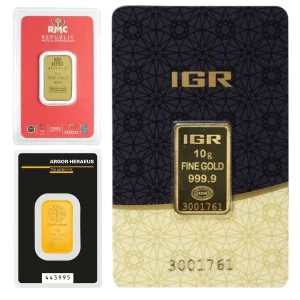
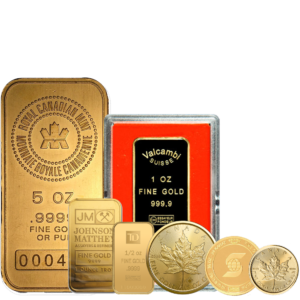
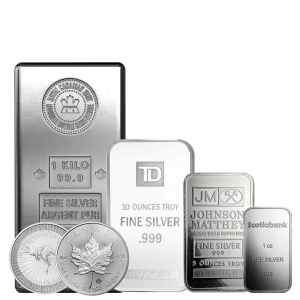
This is precisely the type of environment in which precious metals can become increasingly attractive. Gold and silver cannot manufacture more oil. They cannot reopen a pipeline or clear a shipping lane. But throughout history, they have served as monetary assets that investors turn toward when inflation, geopolitical instability and uncertainty threaten purchasing power.
The energy crisis is no longer something happening somewhere far away.
It will inevitably show up in the price of the things we use every single day.
THE REAL WARNING
The biggest danger may not be where oil prices are today. It is where they could go if multiple critical energy routes remain compromised at the same time.
The world has spent decades becoming accustomed to abundant energy. Now, some of the most important energy arteries on Earth are under extraordinary pressure.
If that continues, the next inflation wave may already be forming, and when the cost of keeping the world running rises this quickly, the value of protecting your purchasing power becomes impossible to ignore.