Hi,
Something strange is happening in the global bond market. Not a stock-market crash. Not a bank failure. Not a dramatic headline announcing that the financial system is breaking.
Something quieter.
Bond yields are climbing back toward levels the world hasn’t seen in years, and in some cases, decades.
The U.S. 10-year Treasury yield has surged to around 5%, reaching its highest level since 2007. That was the year the cracks in the financial system began appearing before the Global Financial Crisis exploded into view.
And America isn’t alone.

LOOK AT THE YEARS
In the United Kingdom, 30-year government bond yields have climbed to their highest level since 1998. That wasn’t an ordinary year in financial markets. The Asian financial crisis was deepening, Russia would soon default on its debt, and the near-collapse of hedge fund Long-Term Capital Management would trigger severe turbulence across global markets.
In France, 10-year yields have reached their highest level since 2008, the year the Global Financial Crisis became a worldwide financial crisis to the highest degree.
In Germany, yields have reached their highest level since 2009, when the world was still dealing with the aftermath of the 2008 financial meltdown.
And then there’s Japan.
Its 10-year government bond yield has reached its highest level since 1996. The timing is particularly striking because Japan’s economy entered recession in 1997, while a serious banking and credit crisis intensified in 1997-98, with major financial institutions failing and lending conditions tightening sharply. Homes were lost and savings were destroyed.
Different countries.
Different decades.
Different crises.
And the bond market is signalling that it is happening again.
AND THEN THERE’S CANADA
Canada just delivered another uncomfortable reminder that these warning signs are not just coming from outside our border. On September 17, Canada’s 30-year bond auction produced an average yield of 4.201%, the highest at a Canadian 30-year auction since July 2007.
Again: 2007.
The year before the Global Financial Crisis became impossible to ignore. This doesn’t mean 2008 is automatically coming back. It does mean something important is happening: investors are demanding increasingly high returns to lend money to governments for decades at a time. But why? Evidence clearly points to a lack of trust in paper fiat currency that is being printed at will in every country in the world. Investors are beginning to realize all at once, in all corners of the world, that the financial system cannot run in perpetuity on debt alone.
And that matters.
Because when the cost of government borrowing rises, the consequences don’t stay inside the bond market. Higher government financing costs can feed into mortgages, corporate borrowing, investment and ultimately the broader economy where we are already seeing inflation rear its ugly head.
EXCEPT FOR CHINA
Perhaps the strangest part of the entire story is China.
While yields across major economies are surging toward multi-decade highs, China’s 10-year government bond yield is sitting near 1.7%, close to historical lows. The global bond selloff is happening almost everywhere. Except China and the divergence is enormous.
So what exactly is the bond market telling us?
When investors begin demanding significantly higher yields from heavily indebted governments, the cost of carrying that debt rises with them and the United States is already carrying roughly $40 trillion in federal debt. The world is nearly $350 TRILLION in debt to central banks.
The more expensive that debt becomes to finance, the more currency that needs to be created in order to service yesterday’s borrowing instead of tomorrow’s spending.
This way of financial operation has always throughout history led to financial calamity, never growth and prosperity. Systems built with gold and silver, sound money, as its foundation allows for true growth to take place over long periods of time.
THE WARNING BEFORE THE WARNING
Financial crises rarely begin with someone ringing a giant bell. The cracks usually appear first. Credit tightens. Borrowing becomes more expensive. Investors become less willing to accept risk. Governments pay more by printing more to finance operations. Eventually, something somewhere becomes too leveraged to absorb the pressure and it finally snaps.
In 2007, those cracks were already visible.
In 1998, global markets were already under extraordinary stress.
In Japan, the banking crisis was already unfolding around the 1996-98 period.
And in 2008, the dam finally broke.
Today, we are looking at bond yields that are once again touching some of those same historical periods. Water is beginning to flow over top of a dam that is incredibly stressed.
That doesn’t prove another financial crisis is coming, but it raises a question that is becoming increasingly difficult to ignore:
What happens when the world’s largest debtors have to pay dramatically more to keep borrowing? Do they inflate the problem away through printing? Or do they simply let the system crumble and build anew?
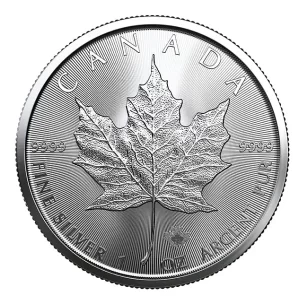
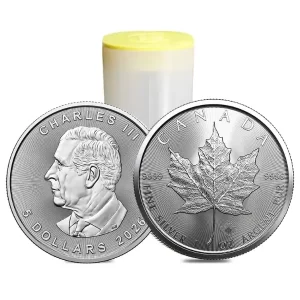
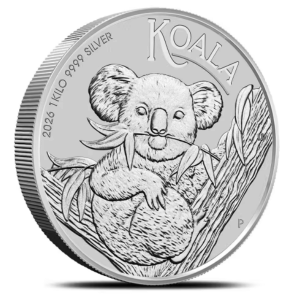
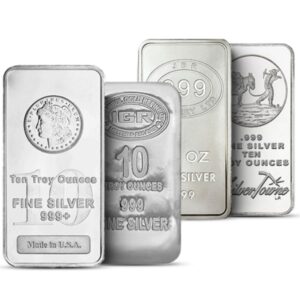
THIS IS WHY GOLD AND SILVER OWNERSHIP MATTER
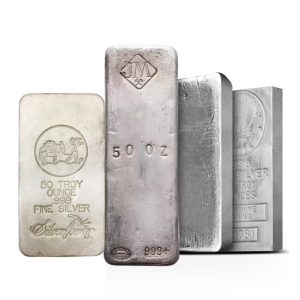
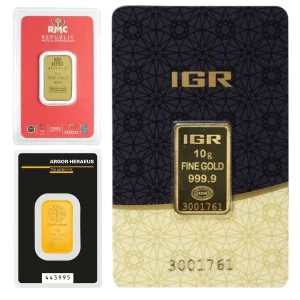
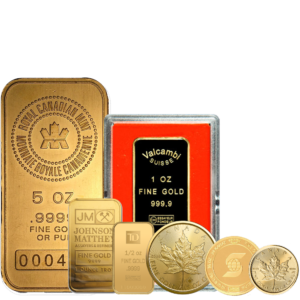
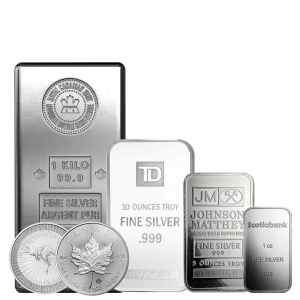
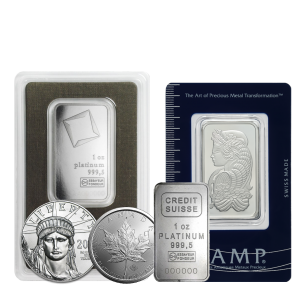
Gold and silver don’t depend on a government being able to refinance its debt at an affordable rate. They don’t require a central bank to keep bond yields under control. They aren’t someone else’s promise to pay. They are tangible assets sitting outside the balance sheet of a government, corporation or bank. And perhaps that’s the most important lesson hidden inside all these numbers.
You don’t wait for the financial system to break before wondering what you should have owned when confidence was still intact because by the time everyone agrees there is a crisis and is rushing to safety… Specifically, in silver and gold. The world’s true money.
The scariest part about these warning signs is that they are no longer warnings.
They’re history.