Hi,
Hi,

If you’re familiar with the world of precious metals like gold and silver, then you’ve probably heard people talk about the gold-to-silver ratio. It’s a technical-sounding term, but it’s actually quite simple.
The gold-to-silver ratio is the number of ounces of silver it takes to buy one ounce of gold.
If gold is trading at $2,800 per ounce and silver is trading at $35 per ounce, then the ratio is 80:1. But what does it mean?
Why the Ratio Matters
The gold-to-silver ratio has fluctuated significantly over the years. Sometimes it’s as low as the 50s or 60s. Sometimes it’s higher, like 80 or 100. But what does it mean?
If the ratio is higher, it means that silver is possibly undervalued relative to gold. If it’s lower, it means that silver has possibly outperformed gold.
It’s not necessarily a great timing indicator. But it’s a great comparative indicator.
Many experienced investors rely on it to determine whether to favor one over the other in their portfolio.
What It’s Signaling Right Now
If the ratio is higher, it means one of two things:
- Investors are favoring gold as a “safe haven” because of the uncertainty in the market.
- Silver just hasn’t caught up yet in terms of momentum.
The thing is, if the ratio is too extreme, then silver has tended to make up a lot of ground. Silver is a volatile metal. When it moves, it moves big. So if it’s lagging behind gold, then it could make up some serious ground.
Again – not a guarantee. But a trend worth monitoring.
At the time of writing this article, the current Gold to Silver ratio is roughly around 60:1 to 62:1, meaning that it would take roughly 60 ounces of silver to purchase an ounce of Gold. This is with the current spot price of Silver hovering around $114 per Oz (CAD) and Gold hovering around $6908 per Oz (CAD).
Strategy Over Emotion
Of course, it’s worth noting that this isn’t exactly a science. And it’s never a good idea to get too attached to the ratio as a crystal ball.
A more strategic approach might be to simply rebalance your portfolio over time. If the ratio appears to be skewed one way or the other, investors might consider increasing their position in the underperforming precious metal.
This is all about strategy versus emotion.
It’s not about speculating on where the price of gold or silver might go tomorrow. It’s about creating a well-rounded portfolio that can weather any market conditions.
Physical Ownership Still Matters
Of course, regardless of where the ratio is, physical ownership of gold and silver is still a priority for many investors.
Gold and silver in physical form eliminate the risk of a counterparty. You own the metals outright – outside of the digital world.
Whether you’re gold-heavy or silver-heavy, physical ownership of precious metals gives investors a sense of security that simply can’t be achieved with paper products.
Buying Gold & Silver from AU Bullion
Of course, if you’re making investment decisions based on the gold-to-silver ratio, it’s worth considering where to buy your precious metals.
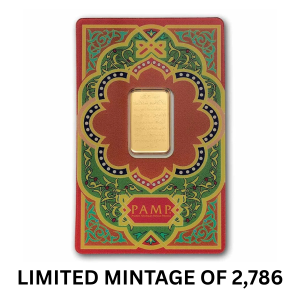
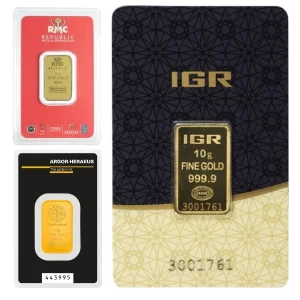
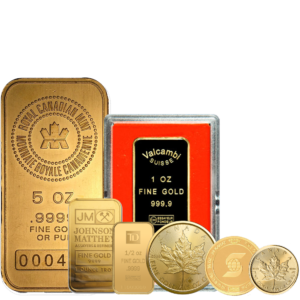
AU Bullion offers a wide variety of investment-grade gold and silver products from around the globe. Their prices are fair and closely mirror the spot price of gold and silver.
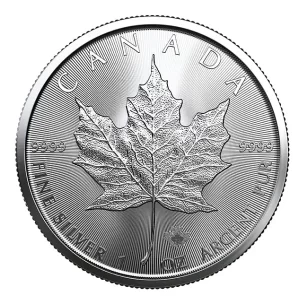
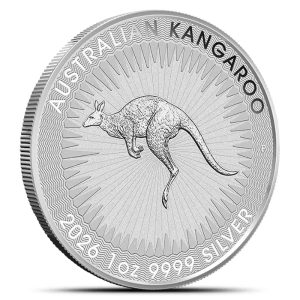
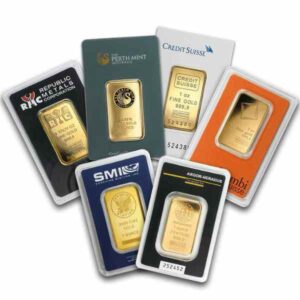
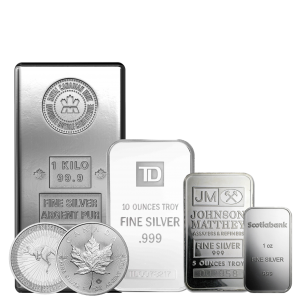
Whether you’re looking to add 1 oz silver coins to your portfolio, 1 kg silver bars, or gold bullion in a variety of weights and types, AU Bullion can get the job done. And done strategically – not on emotion.
The ratio of gold to silver isn’t about the future. It’s about outlook.
The current ratio is sending a message worth paying attention to. It’s not the message itself that matters, but how you respond to it.