Hi,
Hi,

Housing prices seem unstoppable. Every year, headlines tell us homes are becoming more expensive, making ownership feel further out of reach.
But what if we’ve been measuring housing with the wrong yardstick?
When homes are priced in paper currency, they appear to climb forever. When they’re priced in real money, the story changes dramatically.

A Different Way to Measure Housing
Imagine a home built in 1963.
By 1980 it was already 17 years old. By 2010 it was 47 years old. Today it’s more than 60 years old. The roof has aged. The plumbing has aged. The wiring has aged. The home has depreciated like every physical asset does. Yet its dollar price of the house has risen enormously.
Why?
Because the house isn’t the only thing changing. The measuring stick is changing too.
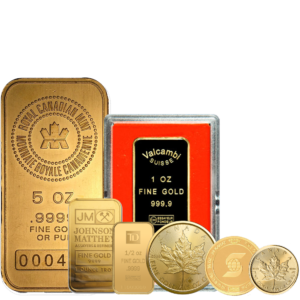
In the early 1960s, a typical U.S. home cost roughly $18,000. With gold priced around $35 per ounce, that equated to more than 500 ounces of gold.
Today, using a $400,000 home and $4,000 gold, it takes about 100 ounces of gold to buy a similar home. That’s an 80% decline in the amount of gold required to purchase a home. In other words, measured in gold, housing has become significantly cheaper over time.
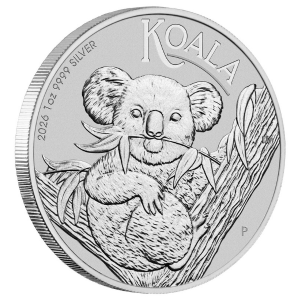
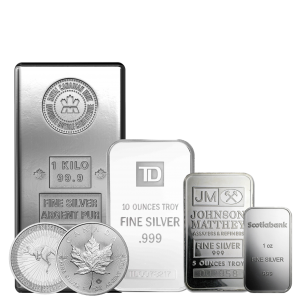
Silver Tells a Similar Different Story
Silver can also be used to view housing, but it requires more context because its price is far more volatile than gold due to its dual role as both an industrial and monetary metal.
In the early 1960s, silver traded around $1.29 per ounce. A $18,000 home would have cost roughly 13,953 ounces of silver. At today’s assumed price of $60 per ounce, a $400,000 home costs about 6,667 ounces of silver.
On the surface, this suggests housing has also become cheaper in silver terms over time. However, silver’s volatility makes long-term comparisons less stable, but regardless, the same principle applies.
At silver’s 1980 peak of roughly $50 per ounce, that same $18,000 home would have cost only about 360 ounces of silver. At a hypothetical modern spike to $120 per ounce back to silver’s January 2026 high, a $400,000 home would cost about 3,333 ounces of silver. What this shows is not a smooth trend like gold, but a wide range driven by silver’s cyclical nature. However, if silver returned to a historic level of 10:1 with gold and silver surged to $400, it would take merely 1000 ounces to purchase an average home.
It is clear that silver can temporarily make housing appear extremely cheap or extremely expensive depending on where it is in its cycle, but historically, if you time it right it is the far more viable option than gold. Gold, by contrast, tends to provide a more stable long-term reference point for purchasing power.
What Gold Reveals
Most people believe homes constantly become more valuable because they only view prices through the lens of dollars.
Gold tells a different story.
A sixty-year-old home should not naturally be worth many multiples of its original price simply because time has passed. Physical structures wear out, require maintenance, and eventually need major renovation or replacement. When an aging asset continually rises in nominal price, it raises an important question:
Is the house becoming more valuable? Or is the currency used to measure the price becoming less valuable?
Final Thoughts
Gold and silver don’t eliminate housing cycles, nor do they guarantee that real estate prices will always fall when measured in precious metals. But they do offer a different perspective on purchasing power.
The next time someone says housing has become impossibly expensive, consider changing the unit of measurement. Sometimes the biggest change isn’t the value of the house. It’s the value of the currency used to price it.