Hi,
Hi,

Picture a dark movie theatre. The lights dim. The audience settles into their seats. On the screen appears a villain everyone thought had been defeated years ago.
Inflation.
After the painful surge of 2020 through 2022, central bankers assured the public that the worst was behind us. Interest rates were raised aggressively, economic growth slowed, and many believed inflation had finally been brought under control. But what if that was only the first act?
Over the past several weeks, a series of economic developments have begun flashing warning signals that are becoming increasingly difficult to ignore. The pieces are beginning to fit together, revealing a picture that investors have seen before, and history suggests it may not be a comfortable one.
The Bank of Canada’s Impossible Choice
The Bank of Canada announced this week that it would hold interest rates steady at 2.25%. On the surface, the decision appeared uneventful. Beneath the surface, however, lies a growing problem. Canada has to be entered a recessionary environment, leaving policymakers trapped between two dangerous doors. Raise interest rates and the economy risks slowing even further. Businesses struggle, consumers pull back spending, and recessionary forces deepen. Cut interest rates and inflation may gain even more momentum, eroding purchasing power and forcing households to pay more for everyday necessities.
This is the nightmare scenario central bankers fear most: stagflation. An environment where economic growth stagnates while inflation continues to rise. For many investors, the word itself sends chills down their spine because there is a historical precedent. During the stagflationary decade of the 1970s, traditional financial assets struggled while precious metals like silver and gold became some of the standout performers of the era surging hundreds of percentage points. When confidence in currencies weakens and purchasing power erodes, investors often begin searching for assets that cannot be printed into existence at the will of a banker. History may not repeat exactly, but the similarities are becoming harder to dismiss with every passing week.
America’s Inflation Problem Returns
South of the border, another warning light has started flashing.
United States inflation has now climbed above 4%, raising fresh concerns that price pressures are proving far more persistent than those at the Federal Reserve anticipated. For months, many analysts argued that inflation would continue moving steadily lower toward central bank targets. Instead, inflation appears to be reversing course, just as we had said it would for a couple years now. Energy costs are rising. Supply chain disruptions are re-emerging. Producer prices are accelerating. The result is a growing concern that the first inflation wave may have only been the opening chapter and that the next one may be worse than the first.
The possibility of a second, stronger inflation cycle is no longer a fringe discussion. If inflation continues moving higher while economic growth slows, policymakers may find themselves facing the same dilemma confronting Canada today. Raise rates and risk economic pain. Cut rates and risk fueling even more inflation. Neither option is attractive. The inflation monster that many believed had been defeated may simply have stepped backstage while preparing for a much larger return appearance. Those that can clearly see the picture in advance have the opportunity to protect themselves today. Gold and silver are well below their all-time highs from January of 2026 and central banks have been buying both aggressively every month since that date. They see the writing on the wall…do you?
Gold Sends a Message
Markets often whisper before they scream. One of the most interesting signals emerging today comes from the gold market.
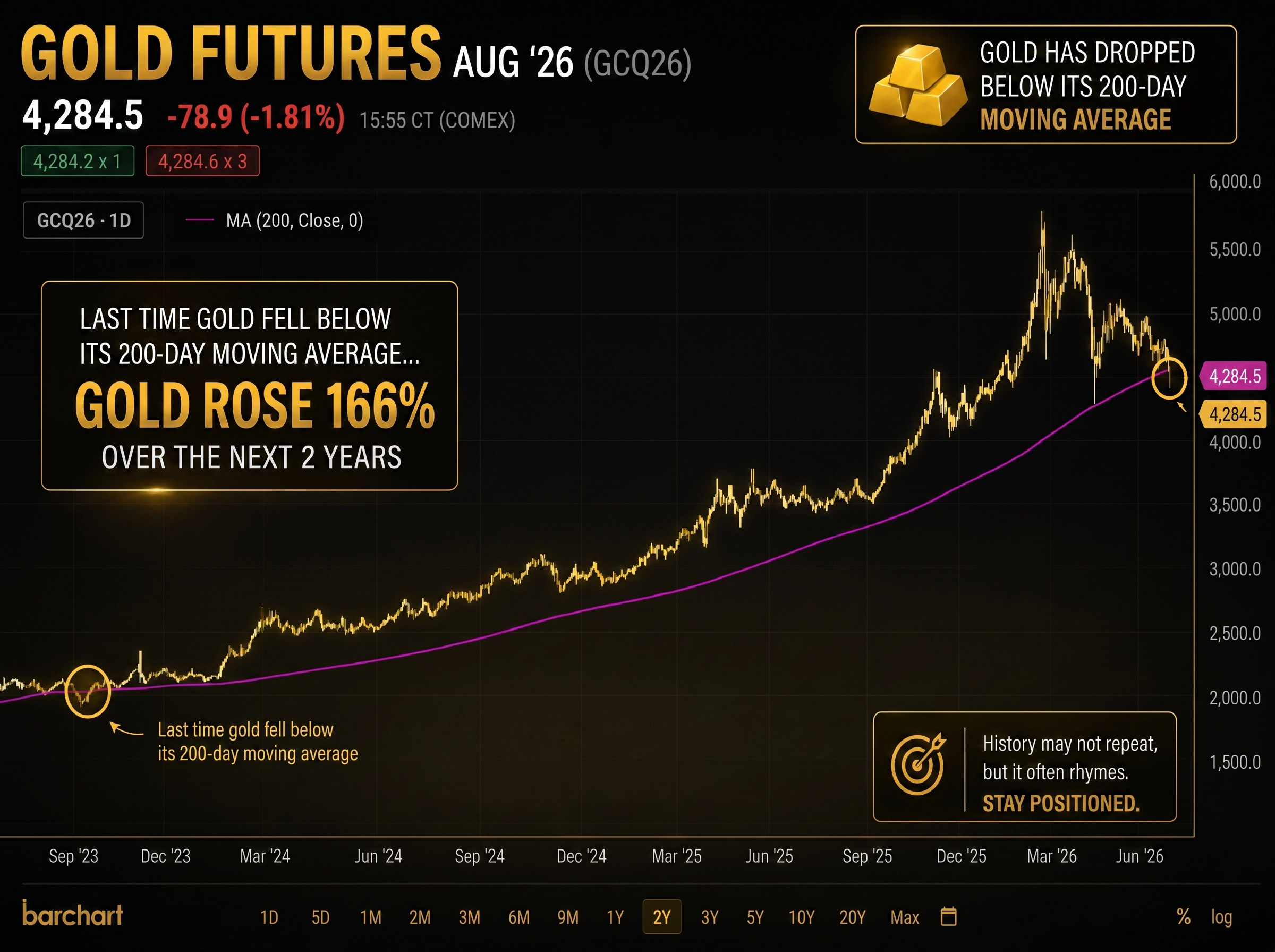
Recently, gold fell below its 200-day moving average, a technical level watched closely by traders and investors around the world. At first glance, this may appear negative. However, history tells a more nuanced story. The last time gold experienced a similar move in November of 2023, it ultimately went on to rise approximately 166% over the following two years.
No indicator guarantees future performance. Markets never move in straight lines, and past performance never guarantees future results. Yet when viewed alongside rising inflation, slowing economic growth, and increasing concerns about stagflation, this technical signal becomes difficult to ignore. Investors are beginning to ask an important question: What if gold is not breaking down? What if it is simply setting the stage for its next major move? And if it is, how much gold is enough? Historically, there is never enough to go around.
Final Thoughts
The economic landscape is beginning to resemble a scene from a movie that many believed had already ended. The Bank of Canada appears constrained. Inflation is reaccelerating. Economic growth is slowing. Gold continues to flash signals that have historically appeared before significant increases in value.
None of these developments guarantee what comes next. However, together they create a narrative that investors would be wise to watch closely. The curtain may be rising on the second act of the inflation story. If history offers any guidance, the assets that thrive during periods of monetary uncertainty like precious metals may once again find themselves in the spotlight.