Hi,
Hi,

Across North America, Europe, and Asia, major stock markets stumbled together last week. Japan’s Nikkei 225 has surrendered weeks of gains, South Korea’s KOSPI suffered one of its sharpest declines in months, Taiwan’s market has weakened alongside the global semiconductor sector, while the technology-heavy NASDAQ posted one of its worst weekly performances in over a year.

One market falling can be dismissed as an isolated event. When weakness begins appearing across continents, investors should start asking a different question: Are these simply corrections or are they the first visible signs of a problem that is much larger?
Cracks Are Appearing Everywhere
Financial markets rarely break all at once. They fracture gradually. Confidence begins to fade. Liquidity becomes more selective. Investors who once chased risk suddenly begin searching for safety. That pattern appears to be emerging.
The recent declines are not confined to one country, one exchange, or one sector. Pressure has spread from the United States to Europe and deep into Asia, with some of the world’s largest technology and semiconductor markets leading the downturn. Markets built on optimism can change direction far faster than they climbed. History has shown that by the time the headlines begin describing a crisis, much of the damage has already occurred.
The question is not whether markets experience corrections, because they always do. They are cyclical in nature. The question is what investors choose to own before confidence really begins to erode.
Smart Money Isn’t Waiting
While equity markets have struggled, another trend has quietly accelerated. Last week alone, global gold ETFs attracted more than US$1 billion in new inflows — the strongest weekly demand since mid-April.
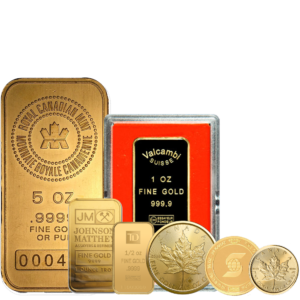
Institutional money does not move without reason. Large investors rarely announce what they are worried about as they prefer to move quietly and move first so they can be repositioned before everyone else notices. Whether the concern is inflation, geopolitical uncertainty, excessive debt, or weakening confidence in financial assets, gold has historically become a destination when investors seek stability rather than speculation. Gold has served that purpose for centuries.
When billions of dollars begin flowing back into the sector while sentiment in precious metals is low, and equity markets weaken, it is a signal worth paying attention to.
The Silver Market Is Sending an Even Louder Message
Perhaps the most fascinating story isn’t happening in the paper markets at all. It is unfolding in the physical market.
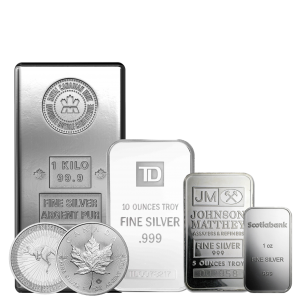
While Western paper pricing places silver near $58 USD per ounce, buyers in parts of Asia are paying dramatically higher prices for physical metal. Retail physical silver has approached $80 USD per ounce in India — roughly a 36% premium over the American paper price. In Japan, physical silver is still trading above $90 USD per ounce, representing premiums exceeding 55%.
These are not minor differences. We covered this very topic in our newsletter last week. Since then, western silver prices have dropped over 7%, yet the physical silver price in India and Japan held steady. This illustrates that price can depend heavily on where buyers are located and whether they are purchasing paper contracts or actual metal. As demand for physical bullion strengthens, the gap between paper pricing and real-world acquisition costs becomes increasingly difficult to ignore. This could very well drive the physical metal toward areas the asset is viewed as more valuable; draining available supplies in areas that focus on paper contracts.
The market may still quote one number as the United States is known for setting the global benchmark, however, buyers in different parts of the world are already paying another price entirely. Eventually, the physical cost will dominate the illusionary paper price.
The Next Policy Move Could Add Fuel
At the same time, political pressure on monetary policy continues to intensify. President Donald Trump has repeatedly urged the Federal Reserve to lower interest rates.
Historically, lower interest rates have reduced the opportunity cost of holding precious metals while simultaneously encouraging greater liquidity throughout the financial system. That becomes especially significant if inflation remains stubborn as it is today. Lower rates combined with persistent inflation have often created an environment where investors look for assets capable of preserving purchasing power rather than simply generating returns. Enter: silver and gold.
Whether policymakers ultimately act or not, the conversation itself reflects growing pressure on the current economic framework and markets are listening carefully.
When the Pieces Begin to Connect
Viewed individually, each of these four stories may mean very little. Together, they tell a far more important story. Stock markets are weakening across continents. Institutional capital is flowing back into gold. Physical silver is commanding dramatically higher prices than paper markets in parts of Asia. Political pressure is building for easier monetary policy while inflation refuses to disappear.
When you add in the newsletters we’ve published over the past weeks and months highlighting different signals that continue to emerge, the picture becomes impossible to ignore: change is already underway.
This is how major shifts begin. Not with a single headline, but with a series of warnings that only make sense in hindsight unless you paid close attention ahead of time. The cracks are no longer hidden. They are widening in plain sight, and the market is beginning to price that reality in.