Hi,
Hi,

Global financial fault lines are widening – record debt piles, accelerating vault drains, fresh rounds of fiat stimulus, and glitchy paper markets all pointing in the same direction. While flashy headlines chase clicks, behind the scenes the quiet accumulation of physical metal by serious players tells a different story. Here’s what the data and metal flows are telling us today.
U.S. Debt Hits Uncharted Territory
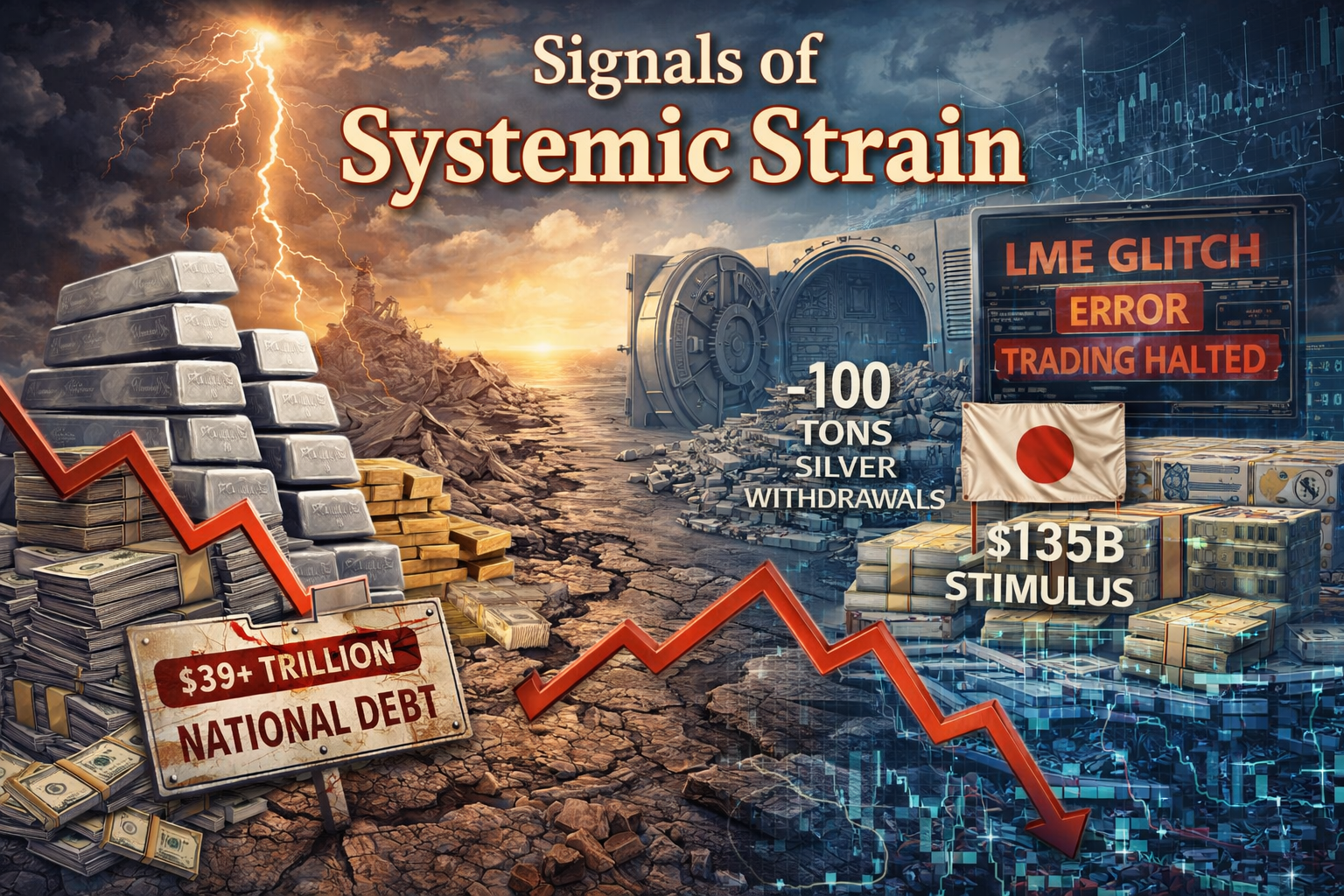
The United States national debt has now crossed a staggering $39 trillion (it surpassed this milestone around March 17-18, 2026). This staggering sum – growing by billions daily – represents an unfathomable burden on future generations and the currency itself. It’s no surprise that nations worldwide are accelerating purchases of real, tangible assets, securing bilateral trade deals in non-dollar terms, and building reserves of goods that hold intrinsic value. History suggests such financial transitions often circle back to timeless stores of wealth like precious metals as the foundations of money.
Massive Silver Withdrawals from Global Vaults
This week alone, reports indicate around 100 tonnes (over 3 million ounces) of silver were drained from Shanghai’s vaults amid ongoing depletion, with Shanghai Futures Exchange and related stocks hitting critically low levels. Meanwhile, physical silver in the COMEX continues multi-month declines, with millions of ounces being pulled in recent days. The formula as of late has been crystal clear, when prices of silver dip, large buyers step in aggressively, taking physical delivery and removing metal from the market entirely. This pattern underscores a clear preference for actual metal over paper promises as the world transitions to a new financial system.
Japan’s Latest Stimulus Wave
Japan recently rolled out a $135 billion USD (approximately 21.3 trillion yen) stimulus package, aimed at spurring growth and easing household pressures from higher prices; ironically caused by overspending and over printing by governments and central banks. This echoes the massive pandemic-era injections that helped propel global inflation well past 10% in many countries. As governments lean on printing presses to “buy” public support with ever-devaluing fiat, the cycle of currency debasement accelerates – making hard assets like silver, gold, or platinum an increasingly logical hedge for countries and citizens alike.
Silver Price Pullback Amid High Demand
Silver has dropped about 9% from recent highs around $80 USD per ounce down to the $69–71 USD range. In China, silver saw equivalent prices declines from higher levels (around $90 USD per ounce down to $80 USD), yet premiums remain elevated after the drop: 11–12% higher per ounce of silver in Shanghai and 5–6% in India compared to Western spot prices. These persistent regional markups tie directly to the vault drains as major players continue to buy cheap silver wherever they can find it pushing prices up in places that have less silver available, where demand is far higher, or both. Lower global paper prices trigger physical demand, naturally leading to an emptying of shelves and tightening real supply.
LME Trading Halt Highlights Paper Vulnerabilities
The London Metal Exchange (LME) faced a technical halt this week on March 16, 2026, suspending electronic trading for nearly three hours due to a glitch in its LME Select platform. This is the 3rd major glitch at the LME or COMEX this year to-date (not even three months into 2026), something that has rarely occurred in the past. These disruptions remind us of the fragility in paper-based systems – when demand for the real metal surges, exchanges can close doors, delay deliveries, or “glitch” entirely, leaving the paper owners holding nothing but that… paper. With hundreds of paper claims often chasing every physical ounce available, owning tangible gold and silver sidesteps these risks entirely.
In times of mounting debt, currency experiments, vault depletions, and major exchange fragilities, the appeal of physical precious metals as a reliable anchor grows clearer by the day. Those who recognize these patterns early tend to fare best when financial transitions unfold.